The Ultimate Heat Press Guide: Master Settings for Flawless Results on Any Material
The difference between a vibrant, durable design and a faded, peeling mistake often comes down to three critical variables: temperature, time, and pressure. Mastering these settings is the true art and science of heat pressing, transforming your creative vision into a flawless, professional-quality reality.
Why Execution Matters: Consistency, Quality, and Avoiding Costly Mistakes
Guesswork in heat pressing is expensive. Wasted materials, ruined garments, and unhappy clients are the direct result of incorrect settings. Execution means producing consistent, high-quality results every single time. It means creating transfers that withstand washing, stretching, and time. Knowing how heat, time, and pressure work together protects your dtf transfers, vinyl, sublimation paper, and blanks. The Core Pillars of Heat Press Mastery: Temperature, Time, and Pressure
Every successful heat transfer project is built upon the precise balance of three fundamental elements. Think of them as the legs of a stool—if one is off, the entire structure is unstable.
Temperature Guide: The Catalyst for Transfer
Temperature is the primary activator in the heat pressing process. It’s the energy that melts and activates the hot-melt adhesive powder on DTF (Direct to Film) transfers, allowing the printed ink layer to bond permanently with fabric fibers, causes the adhesive on Heat Transfer Vinyl (HTV) to adhere to garments, or turns sublimation ink into a gas to permeate a polyester surface.
Too low, and the transfer won’t adhere properly, leading to peeling or cracking after the first wash or a few washes. Too high, and you risk scorching the material, melting the vinyl, over-curing DTF adhesive, or causing dye migration in polyester fabrics, where the fabric’s dye bleeds into your design. Achieving the correct temperature across the entire surface of the platen is crucial for an even application and long-lasting results.
Mastering Time: The Duration of the Bond
Time, or “dwell time,” is the duration for which heat and pressure are applied. This is not a variable to rush. The specified time ensures the heat fully penetrates the transfer material and substrate, allowing for a complete chemical or physical bond to occur. Cutting the time short can result in an incomplete transfer, similar to using an insufficient temperature. Conversely, pressing for too long can lead to the same issues as excessive heat—scorching, melting, and potential discoloration of the substrate.

Applying Pressure: The Force Behind the Adhesion
Pressure is the physical force that ensures intimate contact between the transfer material and the substrate. For DTF (Direct to Film) transfers, firm to heavy pressure is critical to fully embed the ink and activate the hot-melt adhesive into the fabric fibers—insufficient pressure can lead to cracking and peeling after only a few washes.
Proper pressure pushes the transfer vinyl into the weave of the fabric, creating a strong mechanical bond. For sublimation, it ensures the transfer paper stays firmly against the item, preventing “ghosting” or blurry images. Pressure is typically described as light, medium, or firm. Too little pressure results in a weak bond and peeling edges. Too much can cause the adhesive to squeeze out from the edges of the design or can leave an unsightly press mark on the garment.
Essential Equipment and Setup for Optimal Performance
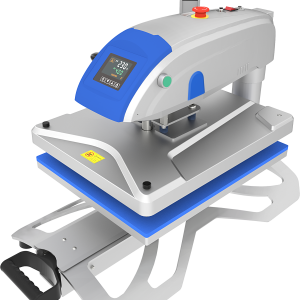
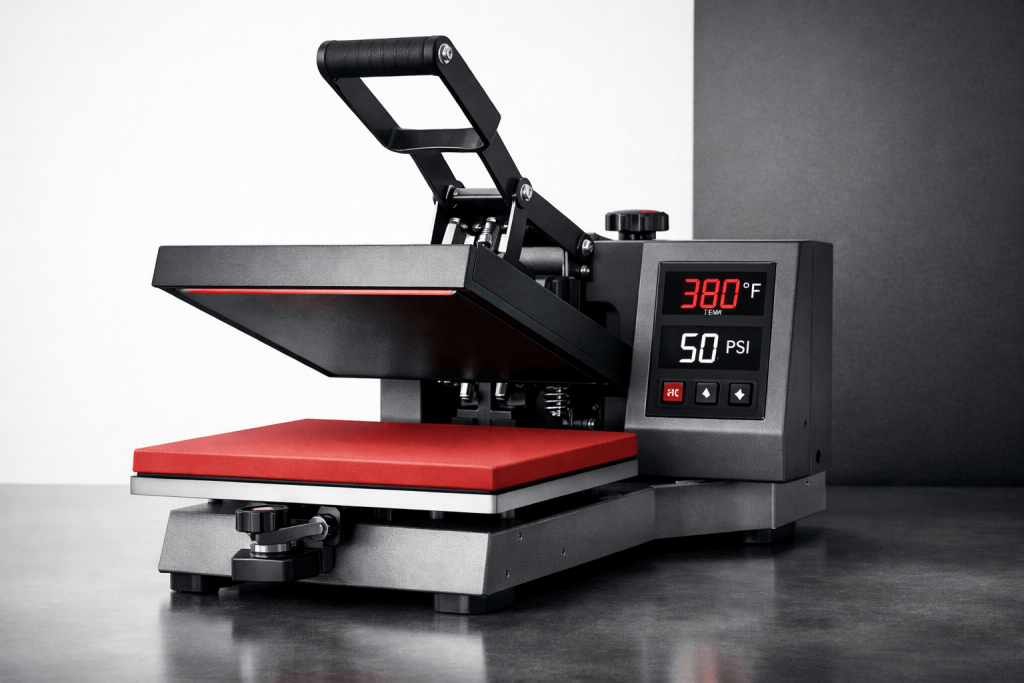
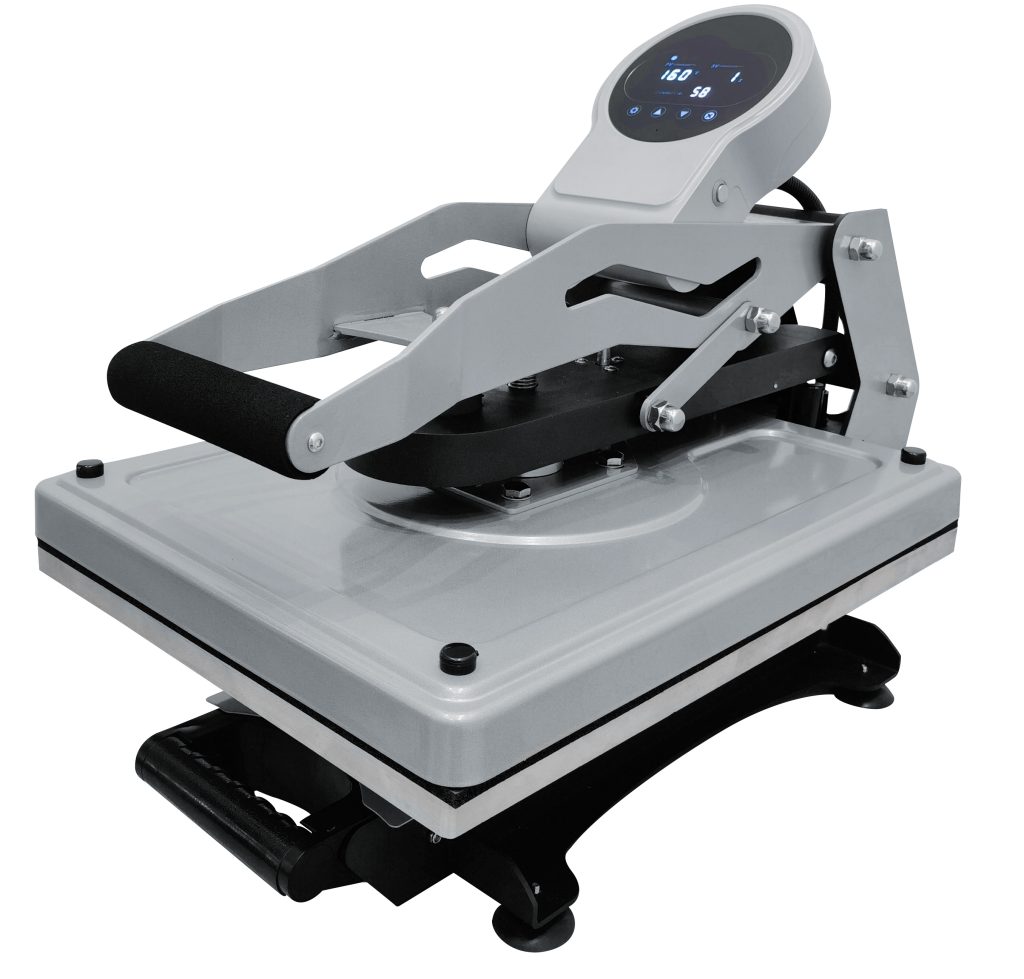
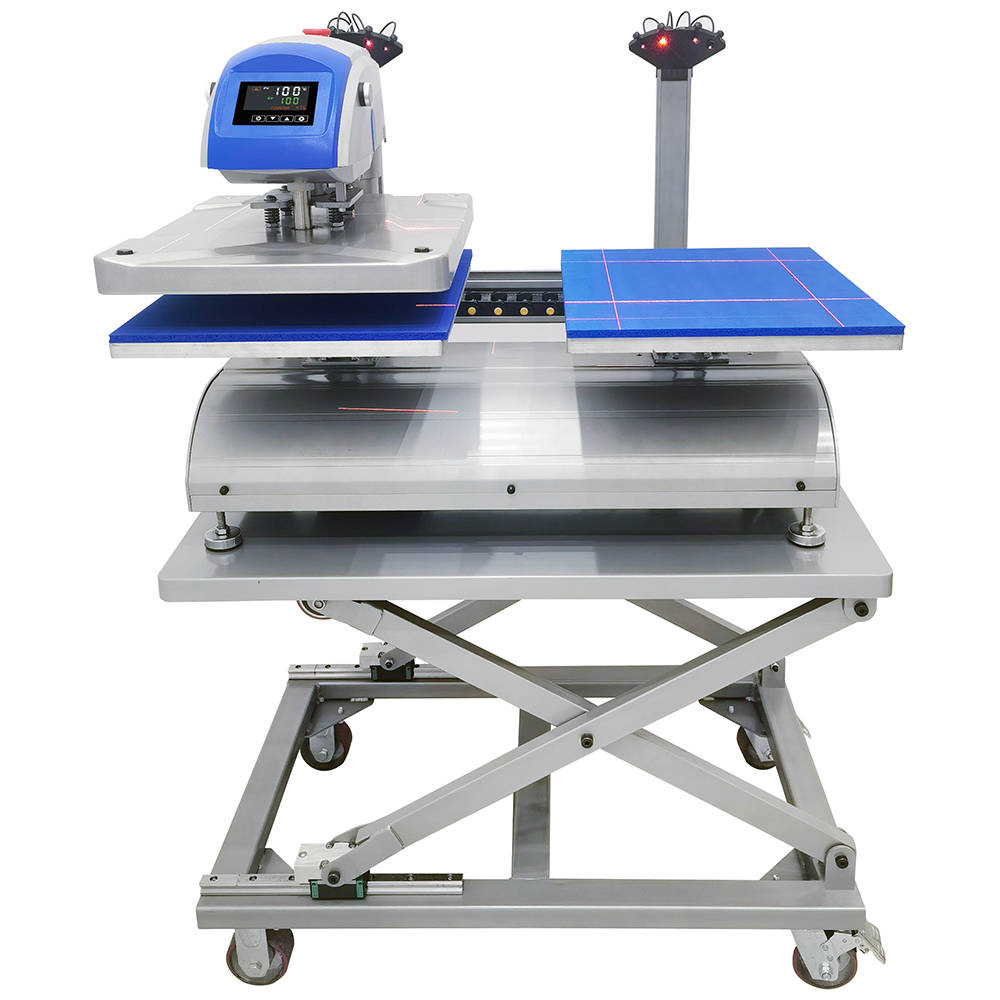
Your results are only as good as your tools and your workspace. A quality setup is non-negotiable for achieving professional-grade heat transfers. At the core of that setup is a reliable, high-quality heat press—it is the first and most essential piece of equipment to invest in, even before a printer, powder shaker, or curing oven.
For DTF (Direct to Film) transfers in particular, consistent temperature, accurate pressure control, and even heat distribution are critical to properly melt and embed the hot-melt adhesive into the fabric. Without a dependable heat press, even the best DTF prints will be prone to poor adhesion, cracking, and premature peeling.
Working with Apparel Fabrics: Cotton, Polyester, and Blends
Apparel customization is a cornerstone of the industry, with the global custom t-shirt printing market projected to hit USD 15.89 billion by 2033.
- Cotton: This natural fabric is forgiving and a great starting point for beginners. It generally requires higher temperatures (280-300°F / 135-150°C) with heavy pressure for 10-15 seconds for most DTF Transfers.
- Polyester: This synthetic fabric is sensitive to heat and prone to dye migration. Use lower temperatures (240-260°F / 115-127°C) and shorter press times. Always test a small area first.
- Blends (50/50): For cotton/polyester blends, find a middle ground. A temperature around 260-280°F / 127-135°C is often a safe bet, balancing the needs of both fibers.
The Precision of DTF Printing
Direct-to-Film (DTF) transfers offer vibrant, full-color designs that can be applied to a wide range of fabrics, including cotton, polyester, and blends. The DTF application is a two-step process. The first press is typically done at 240-300°F (115-150°C) (depending on the fabric) for 10-15 seconds with heavy pressure. After peeling the film, a second press of 5-10 seconds with a protective sheet sets the design, improving durability and giving it a matte finish by pressing the design further into the fabric.
The Importance of the Peel: Warm vs. Cool Peel
The “peel” refers to removing the carrier sheet after pressing. This is a critical step determined by the type of transfer material.
- Instant Hot Peel: The carrier sheet is removed immediately after the platen lifts. This is now the most popular in DTF to save time and increase productivity.
- Cold/Warm Peel: The carrier sheet is left in place until the garment and transfer have cooled down. Peeling too early will ruin the transfer.
The Transfer Process
Carefully position your transfer on the substrate. For apparel, use landmarks like the collar and seams to ensure proper alignment. Engage the press and wait for the timer to complete. Once finished, open the press smoothly to avoid shifting the transfer.
Post-Press Care for Durability
Follow the peel instructions for your specific material (Hot or Cold). For added durability DTF, perform a brief second press for 5-8 seconds with a protective sheet. Instruct the end-user to wait 24-48 hours before the first wash, and to wash garments inside-out with cold water and tumble dry on low.
Conclusion
Remember the core principles: heat activates, time bonds, and pressure secures. Always start with the manufacturer’s recommended temperature settings for your heat transfers and adjust based on test results. Investing in quality heat press machines and materials will always pay dividends in the quality and durability of your final product.

Discover a diverse range of heat presses at DTF.ca, where we provide both clamshell and swing-away models crafted for maximum efficiency and user-friendly operation. Each machine is tested for performance, trusted by Canadian print shops, and backed by fast local shipping. Explore our heat press equipment collection today and choose the perfect machine to enhance your production quality.